Start with the period around the game
Look at surrounding conventions first: familiar interfaces, common rules and the habits players brought with them. That wider frame can show whether a design followed, adjusted or quietly resisted its moment.
Thoughtful game writing for curious players
Button & Branch offers thoughtful writing for curious players: clear, specific articles about game design, history, mechanics, creators, genres and play. We begin with a particular game, feature or reader question, then separate established information from editorial interpretation so the discussion stays useful without assuming specialist knowledge.
Follow the thread
Release-era context
Games carry the marks of their moment. A release-era note places a design choice alongside the conventions and expectations around it, helping readers notice what it made easier to see, what it asked of players and how later conventions reshaped the conversation.
Browse the archive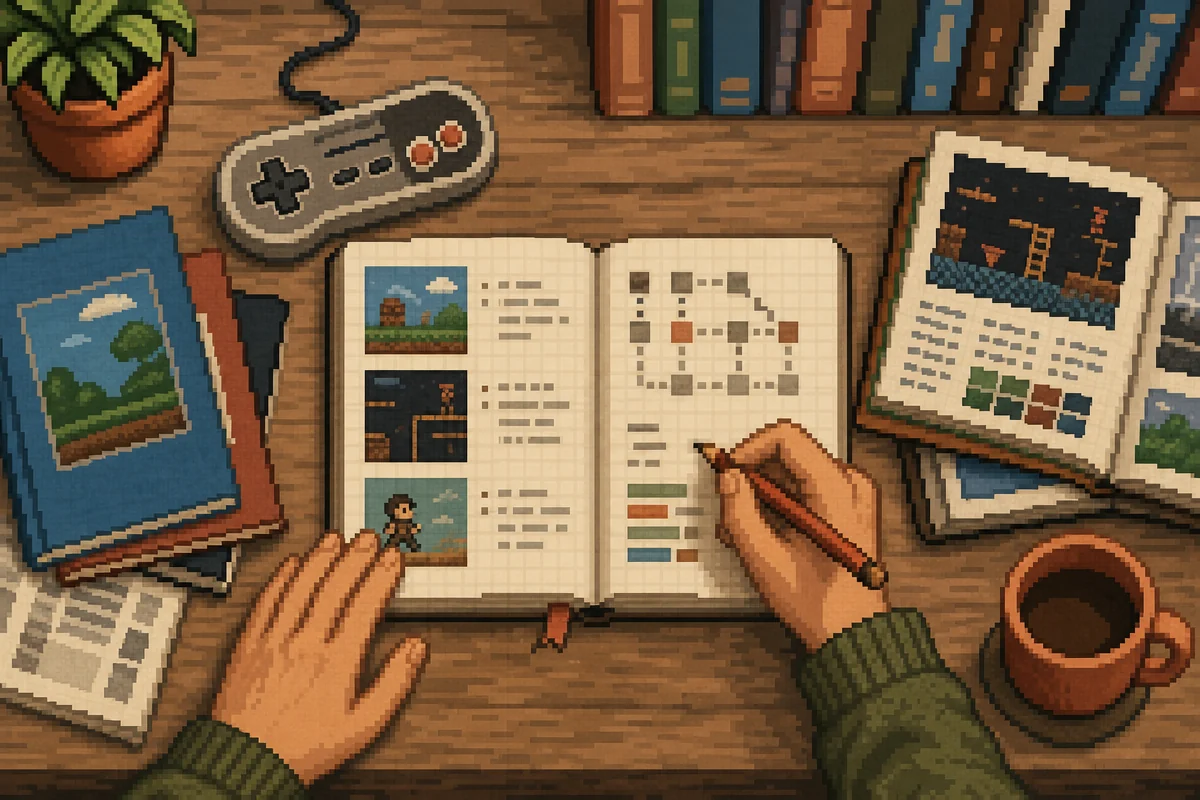
Look at surrounding conventions first: familiar interfaces, common rules and the habits players brought with them. That wider frame can show whether a design followed, adjusted or quietly resisted its moment.
When conventions shift, player expectations shift with them. A small change to an interface, rule or rhythm can alter what feels legible, demanding or possible in play.
Place two moments side by side to trace a change in design language: how interfaces guide attention, how rules distribute pressure and how players learn what a game asks of them.
Mechanic lens
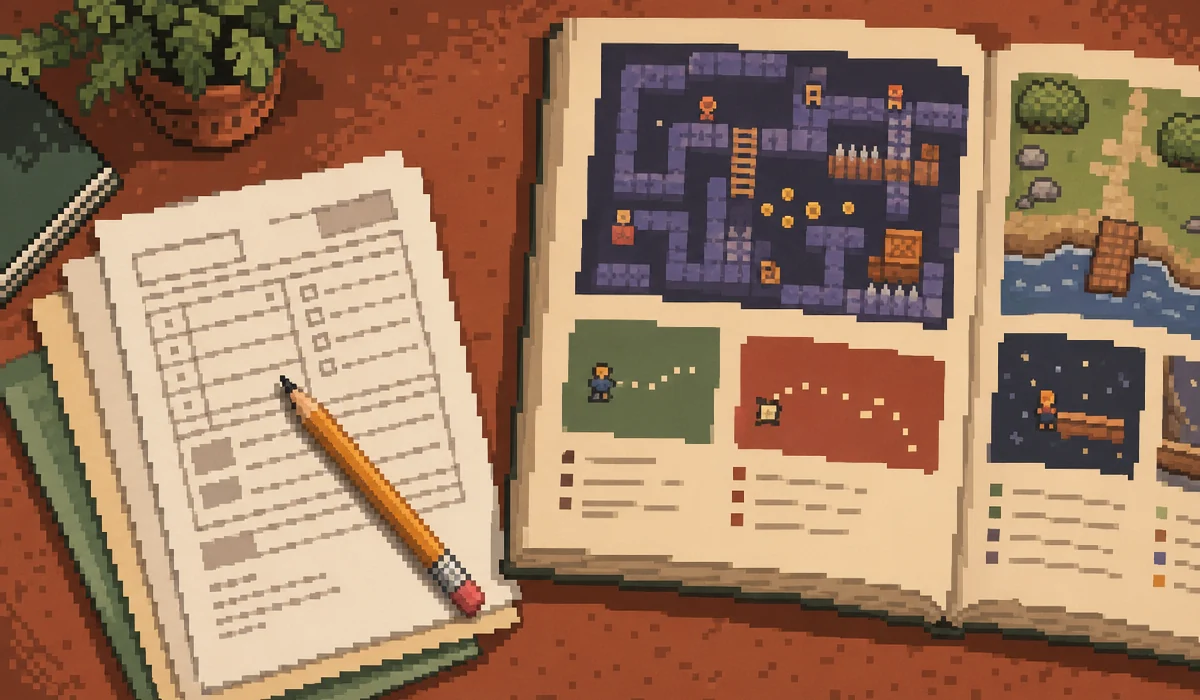
Papers, Please offers an approachable entry point for examining how a game turns rules into play. Follow one document check from first glance to final decision, then consider how the interface, bureaucracy and moral pressure shape the experience.
Start with the documents and checks on screen. Notice where your eye travels, which detail interrupts the routine and when a rule becomes a decision. The interface makes a broad rule tangible through small, visible actions.
Set the routine check beside the situation around it. When a decision is procedural but its consequence feels personal, bureaucracy and moral pressure occupy the same moment.
Try the same lens with another mechanic: what does the interface make immediate, and what remains hidden until repetition? That contrast can help you discuss how rules express a wider idea.
 Start with the essentials
Comparative editorial note
Into the Breach and Hades organise time in notably different ways. One makes the next turn available for inspection; the other lets repeated runs gather narrative meaning. The comparison shifts attention from outcome to the player’s changing sense of what a return can do.
Into the Breach
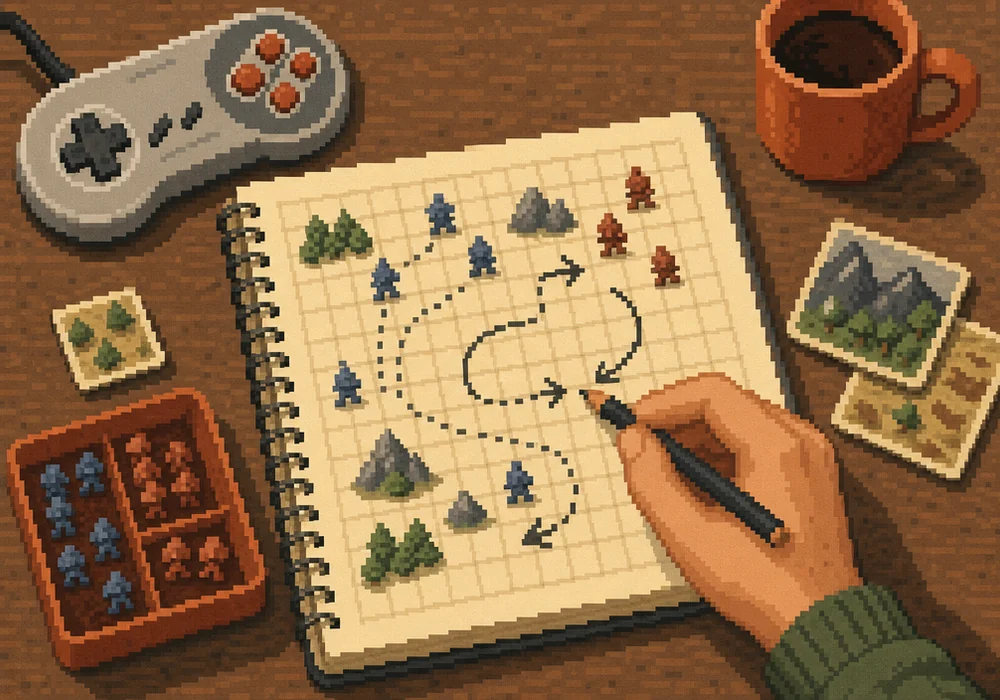
Its turn structure makes the next decision feel like something to inspect: positions, threats and consequences become part of the visible problem. A close reading can follow how constrained decision-making changes the player's sense of control.

Hades
Repeated runs and narrative progression make failure part of the shape of play rather than a full stop. One reading is that returning matters because the run is connected to a larger story, not only because the player tries the same task again.
Editorial standards
A useful note has a clear edge. Button & Branch leaves out unsupported current claims, publisher affiliation and verdicts that available evidence cannot carry, keeping attention on the game, feature or question at hand.
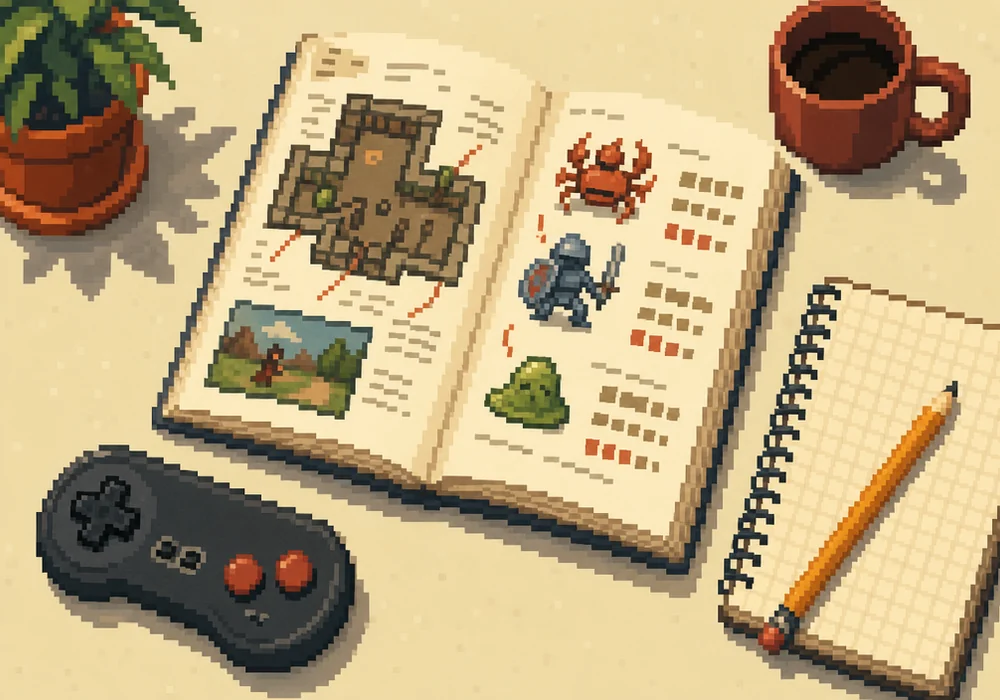
A piece remains anchored to a named game, mechanic, creator or release-era detail. Context earns its place by helping readers understand the feature being discussed.
When available material cannot support a conclusion, the note says so. That boundary keeps an interpretation open to another reader’s experience.
The publication does not present unverified release details, rankings, scores or invented testimony as settled information. Clear headings, descriptive links and accessible controls make that restraint easier to follow.
The reading path
A Button & Branch topic moves through a deliberate sequence so the finished piece remains concrete, readable and open to discussion.
Begin with a game, feature, mechanic or reader question that gives the discussion a clear place to start.
Place the subject beside relevant history, conventions or patterns of play without widening the claim unnecessarily.
Follow the visible details: interfaces, rules, levels, decisions and the ways they shape what play makes possible.
Keep established information, editorial interpretation and reader-facing suggestion distinct as the note takes shape.
Reader questions
A reader may be looking for a starting point, a term explained or a way to respond to an interpretation. These answers focus on practical points of entry.
Continue the thread
Send it to Button & Branch through the form, with enough detail for the subject to be understood clearly.
Use the form to share a question, correction or topic suggestion.